August 20262 minIntermediate
What Is the Bond Market?
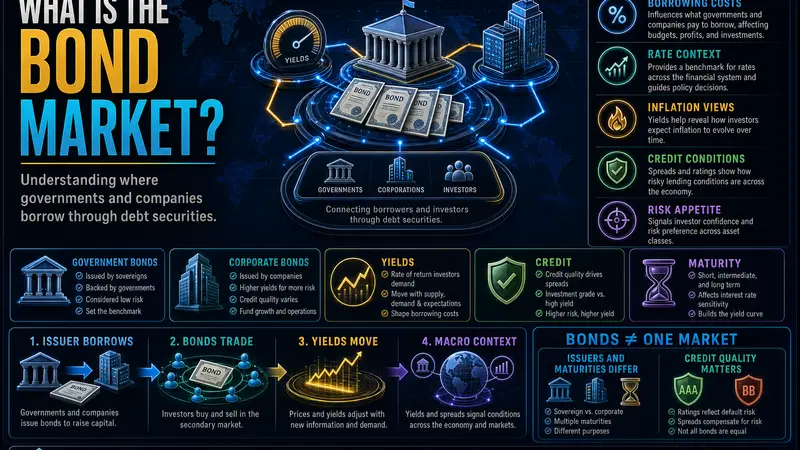
The bond market is where debt securities trade, offering important context about borrowing costs, rates, and broader financial conditions.
Loading page…
Beginner-friendly crypto, macro, and market structure explainers for reading the Daily Pulse with more context.
Showing 1–12 of 326 guides
The bond market is where debt securities trade, offering important context about borrowing costs, rates, and broader financial conditions.
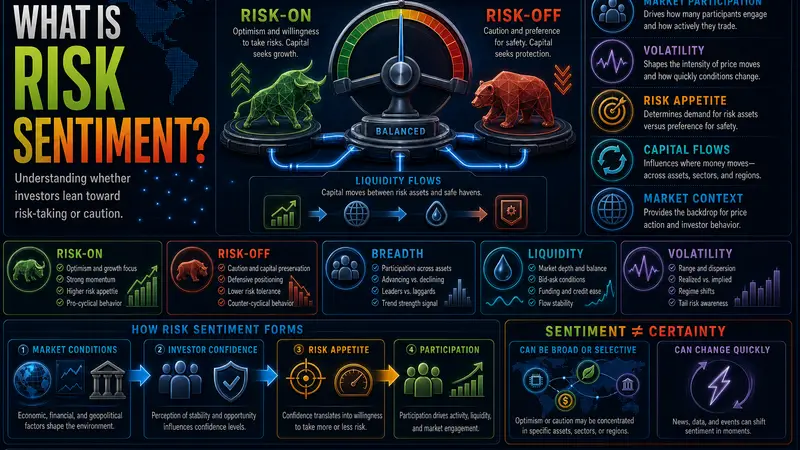
Risk sentiment describes the market’s general appetite for risk-taking versus caution.
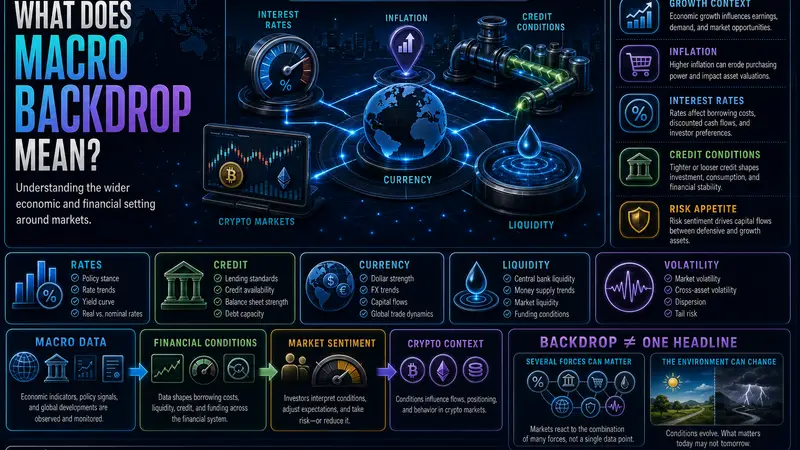
Macro backdrop is the broad economic and financial context surrounding market activity.
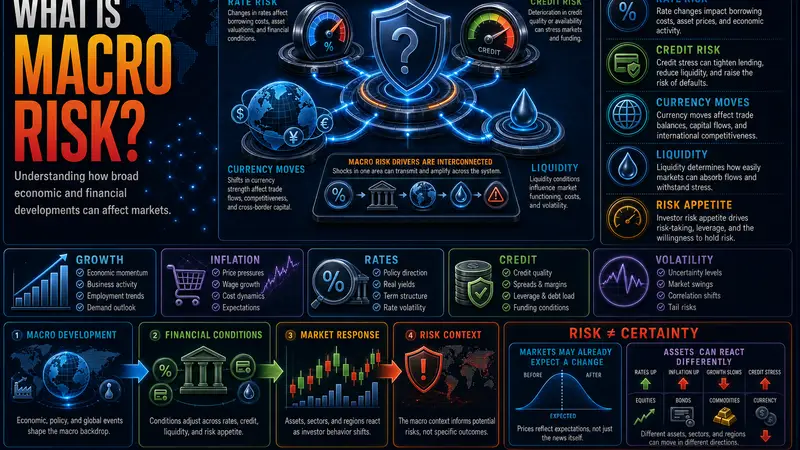
Macro risk is the possibility that broad economic or financial forces could affect market conditions and risk appetite.
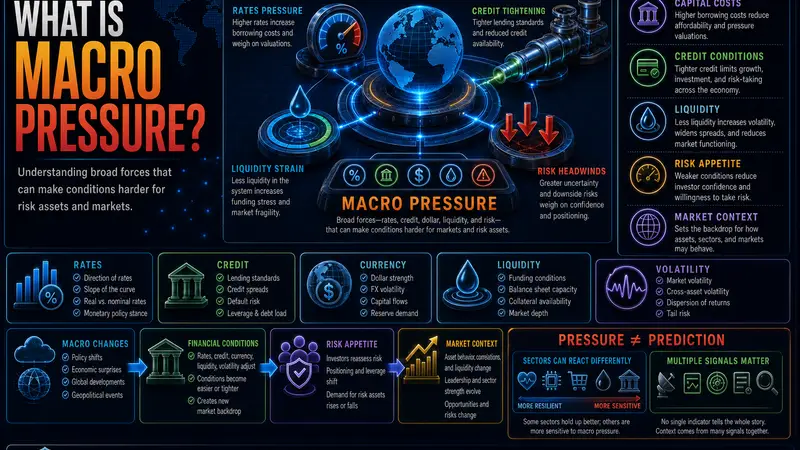
Macro pressure describes broad conditions that may weigh on risk-taking and market activity.
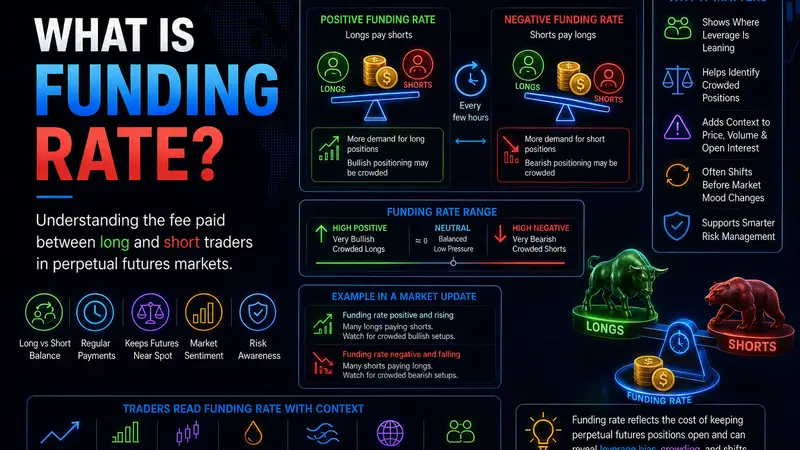
Funding rate shows whether long or short traders are paying to keep perpetual futures positions open.
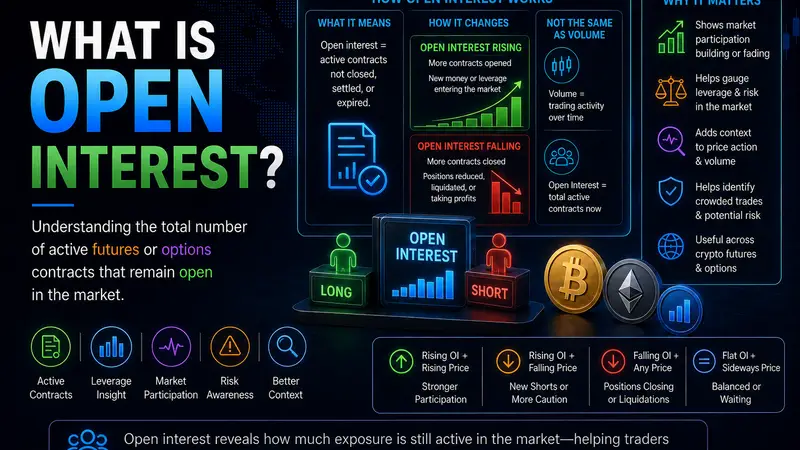
Open interest shows how many active futures or options contracts remain open in a market.
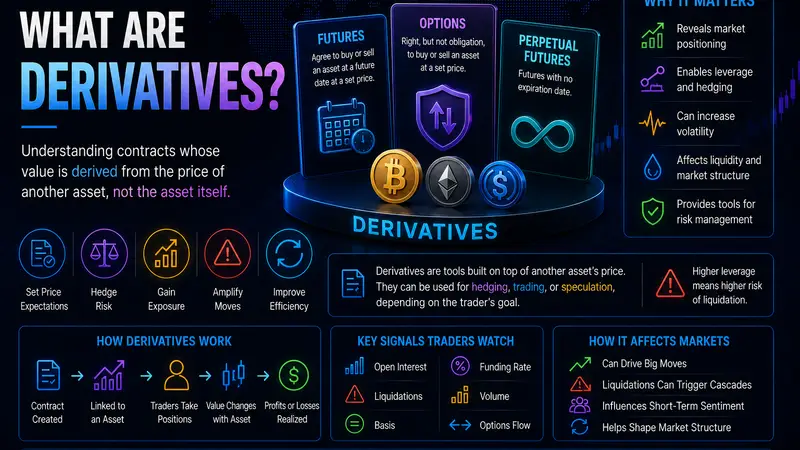
Derivatives are contracts tied to another asset’s price and can shape leverage, liquidations, volatility, and market structure.
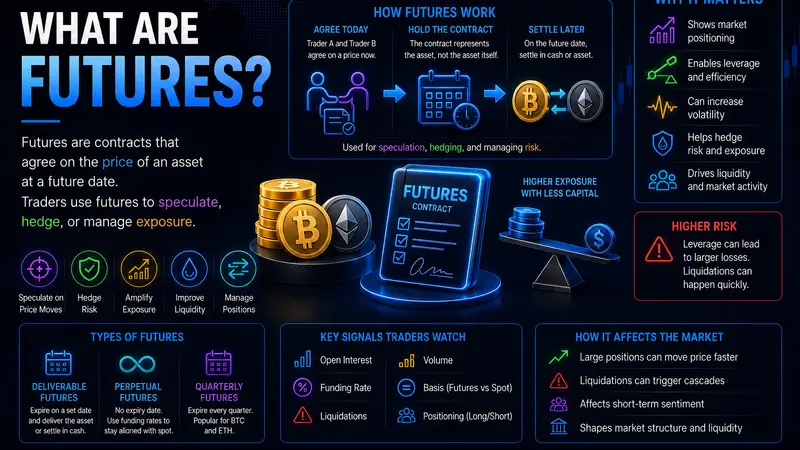
Futures are contracts tied to future prices, and they can affect leverage, liquidations, and crypto market structure.
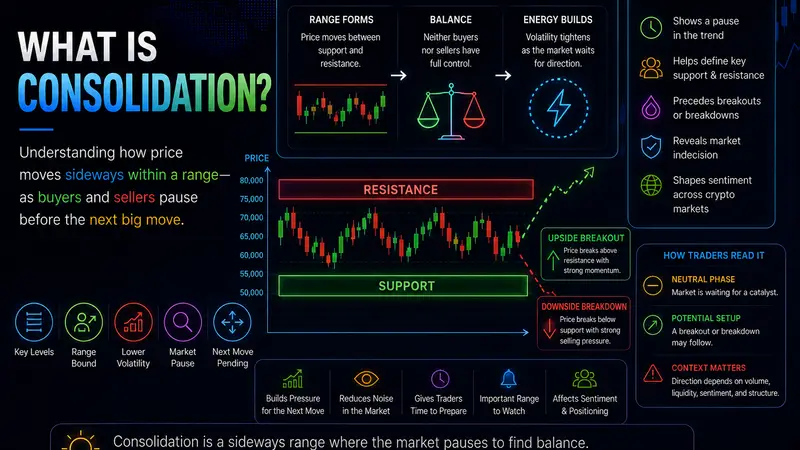
Consolidation happens when price moves sideways within a range while traders wait for clearer direction.
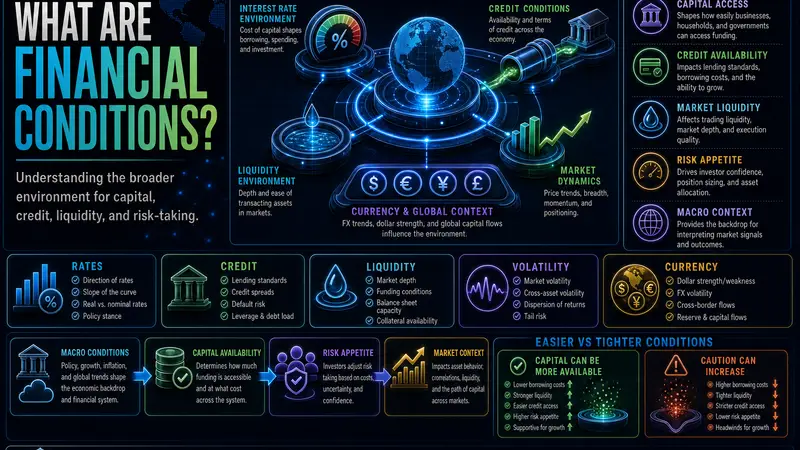
Financial conditions describe the broader environment for capital, credit, liquidity, and risk-taking across markets.

Licensing rules set conditions that may require crypto businesses to obtain authorization for specific regulated activities.
Beginner-friendly crypto, macro, and market structure explainers for reading the Daily Pulse with more context.
Showing 61–72 of 326 guides
The bond market is where debt securities trade, offering important context about borrowing costs, rates, and broader financial conditions.
Risk sentiment describes the market’s general appetite for risk-taking versus caution.
Macro backdrop is the broad economic and financial context surrounding market activity.
Macro risk is the possibility that broad economic or financial forces could affect market conditions and risk appetite.
Macro pressure describes broad conditions that may weigh on risk-taking and market activity.
Funding rate shows whether long or short traders are paying to keep perpetual futures positions open.
Open interest shows how many active futures or options contracts remain open in a market.
Derivatives are contracts tied to another asset’s price and can shape leverage, liquidations, volatility, and market structure.
Futures are contracts tied to future prices, and they can affect leverage, liquidations, and crypto market structure.
Consolidation happens when price moves sideways within a range while traders wait for clearer direction.
Financial conditions describe the broader environment for capital, credit, liquidity, and risk-taking across markets.
Licensing rules set conditions that may require crypto businesses to obtain authorization for specific regulated activities.