
August 20262 minIntermediate
What Are Tech Stocks?
Tech stocks are technology-sector shares whose performance can help show broader growth and risk sentiment.
Loading page…
Beginner-friendly crypto, macro, and market structure explainers for reading the Daily Pulse with more context.
Showing 1–12 of 326 guides
Tech stocks are technology-sector shares whose performance can help show broader growth and risk sentiment.

Equity risk is uncertainty in stock markets that can influence broad risk appetite and crypto macro context.

Cross-asset correlation shows how crypto and other markets have moved in relation to each other over time.
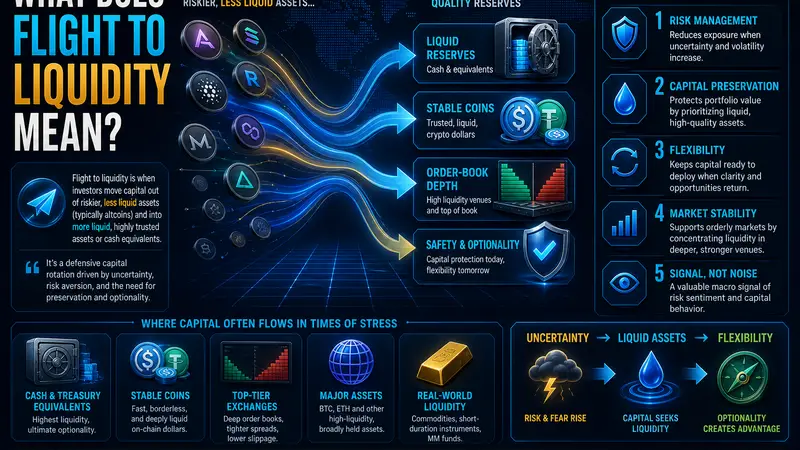
Flight to liquidity is a shift toward readily tradable assets during uncertainty, often affecting crypto participation and volatility.

Capital preservation prioritizes managing downside, liquidity, and operational risk rather than pursuing the highest return.

Defensive positioning is a cautious shift toward lower-risk exposure, liquidity, and reduced sensitivity to market uncertainty.
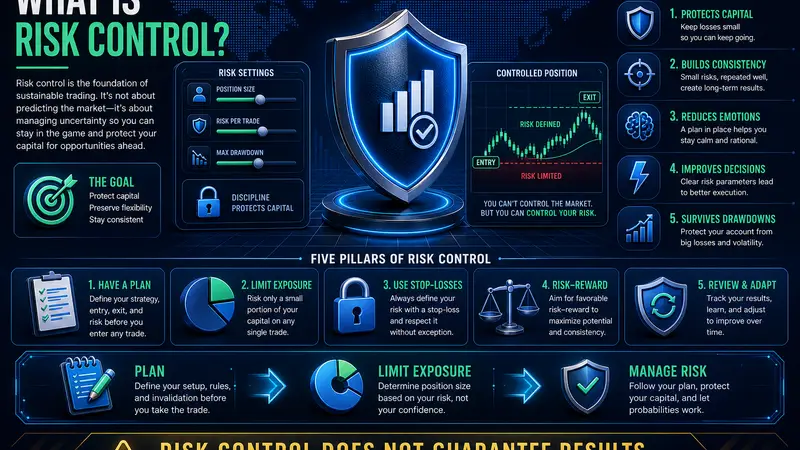
Risk control is the process of managing position, liquidity, leverage, and operational risks in uncertain crypto markets.

Retail sales show consumer spending and can add context to macro conditions that influence crypto markets.

ISM data is survey-based business information that can add early context about growth, demand, employment, and prices.

Crypto compliance is the set of processes used to meet the rules and responsibilities that apply to a crypto service.
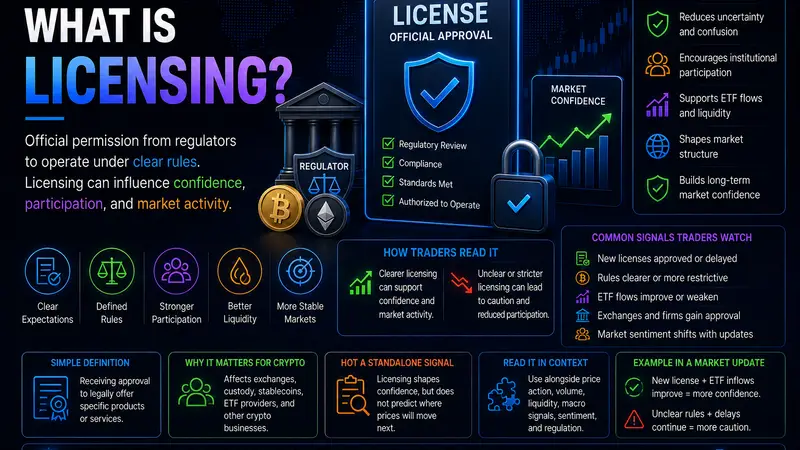
Licensing explains how official approval to operate can influence confidence, regulation, and crypto market participation.

Bond yields are measures of bond return that help show borrowing-cost and macro conditions.
Beginner-friendly crypto, macro, and market structure explainers for reading the Daily Pulse with more context.
Showing 37–48 of 326 guides
Tech stocks are technology-sector shares whose performance can help show broader growth and risk sentiment.
Equity risk is uncertainty in stock markets that can influence broad risk appetite and crypto macro context.
Cross-asset correlation shows how crypto and other markets have moved in relation to each other over time.
Flight to liquidity is a shift toward readily tradable assets during uncertainty, often affecting crypto participation and volatility.
Capital preservation prioritizes managing downside, liquidity, and operational risk rather than pursuing the highest return.
Defensive positioning is a cautious shift toward lower-risk exposure, liquidity, and reduced sensitivity to market uncertainty.
Risk control is the process of managing position, liquidity, leverage, and operational risks in uncertain crypto markets.
Retail sales show consumer spending and can add context to macro conditions that influence crypto markets.
ISM data is survey-based business information that can add early context about growth, demand, employment, and prices.
Crypto compliance is the set of processes used to meet the rules and responsibilities that apply to a crypto service.
Licensing explains how official approval to operate can influence confidence, regulation, and crypto market participation.
Bond yields are measures of bond return that help show borrowing-cost and macro conditions.