September 20263 minBeginner
What Does Macro Headwinds Mean?
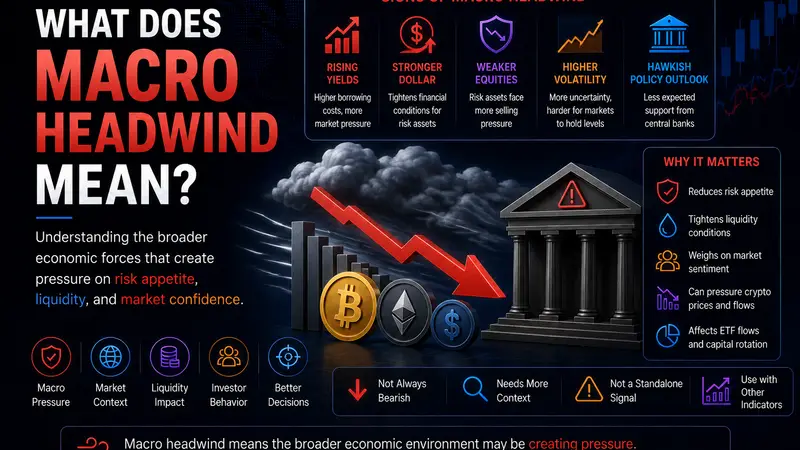
Macro headwind means broader economic conditions may be adding pressure to risk appetite, liquidity, or market confidence.
091
Read guideLoading page…
Beginner-friendly crypto, macro, and market structure explainers for reading the Daily Pulse with more context.
Showing 1–12 of 326 guides
Macro headwind means broader economic conditions may be adding pressure to risk appetite, liquidity, or market confidence.
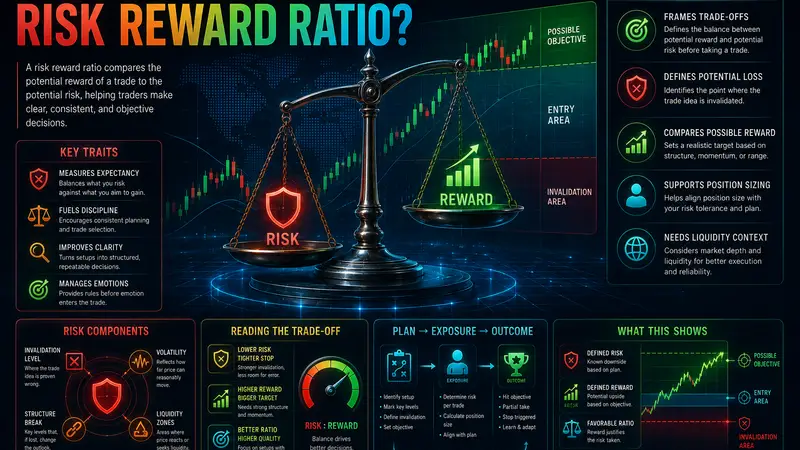
A risk reward ratio compares a planned downside with a possible upside, helping traders frame a market trade-off before taking exposure.

A market recovery rally is a sustained price rise after weakness or consolidation, often assessed through participation, volume, liquidity, and follow-through.

A market rally is a period of rising prices that can reflect improving demand or a temporary market reaction.

A bull market is a period of broadly rising prices, improving confidence, and stronger risk appetite.

A bear market is a period of broadly weaker prices, cautious sentiment, and reduced risk appetite.
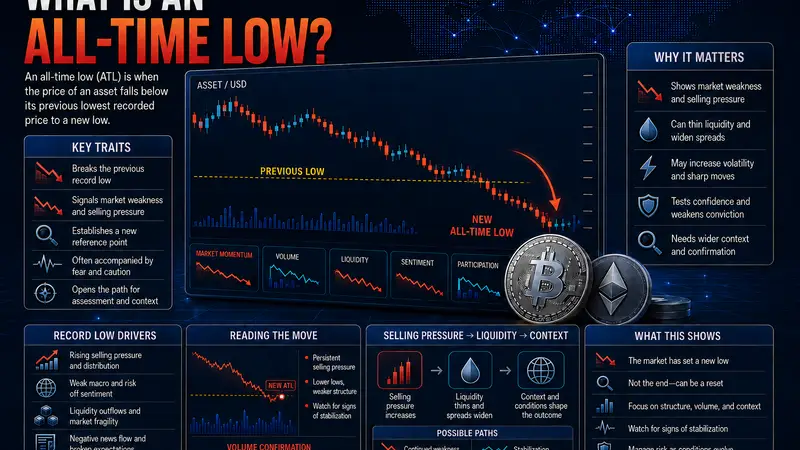
An all-time low is the lowest recorded price of an asset and a reference point for market weakness, liquidity, and selling pressure.

An all-time high is the highest recorded price of an asset and a reference point for demand, price discovery, and market conditions.

Event risk is the potential for scheduled or unexpected news to trigger volatility in crypto and wider markets.
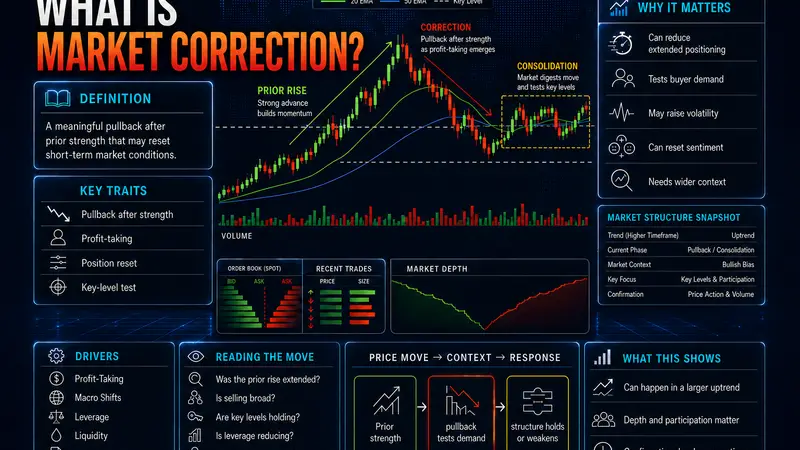
A market correction is a meaningful pullback after prior strength and does not automatically signal a trend reversal.
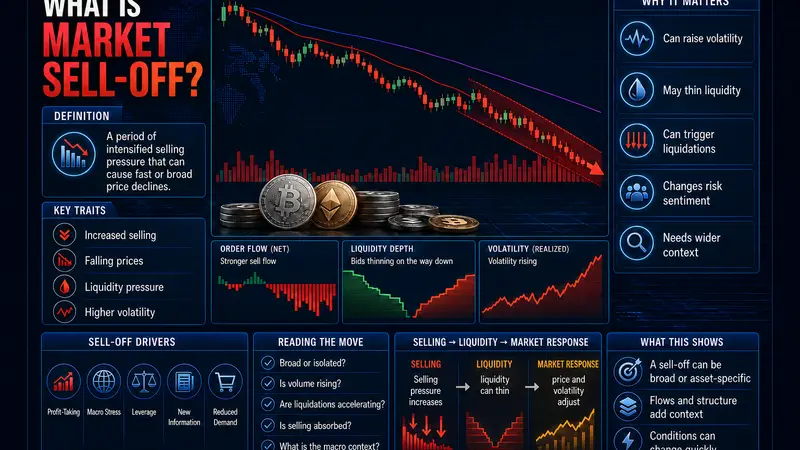
A market sell-off is a period of intensified selling pressure that can cause fast or broad price declines.

Headline risk is the potential for breaking news to quickly affect crypto prices, liquidity, and sentiment.
Beginner-friendly crypto, macro, and market structure explainers for reading the Daily Pulse with more context.
Showing 13–24 of 326 guides
Macro headwind means broader economic conditions may be adding pressure to risk appetite, liquidity, or market confidence.
A risk reward ratio compares a planned downside with a possible upside, helping traders frame a market trade-off before taking exposure.
A market recovery rally is a sustained price rise after weakness or consolidation, often assessed through participation, volume, liquidity, and follow-through.
A market rally is a period of rising prices that can reflect improving demand or a temporary market reaction.
A bull market is a period of broadly rising prices, improving confidence, and stronger risk appetite.
A bear market is a period of broadly weaker prices, cautious sentiment, and reduced risk appetite.
An all-time low is the lowest recorded price of an asset and a reference point for market weakness, liquidity, and selling pressure.
An all-time high is the highest recorded price of an asset and a reference point for demand, price discovery, and market conditions.
Event risk is the potential for scheduled or unexpected news to trigger volatility in crypto and wider markets.
A market correction is a meaningful pullback after prior strength and does not automatically signal a trend reversal.
A market sell-off is a period of intensified selling pressure that can cause fast or broad price declines.
Headline risk is the potential for breaking news to quickly affect crypto prices, liquidity, and sentiment.