July 20262 minIntermediate
What Is Stablecoin Settlement?
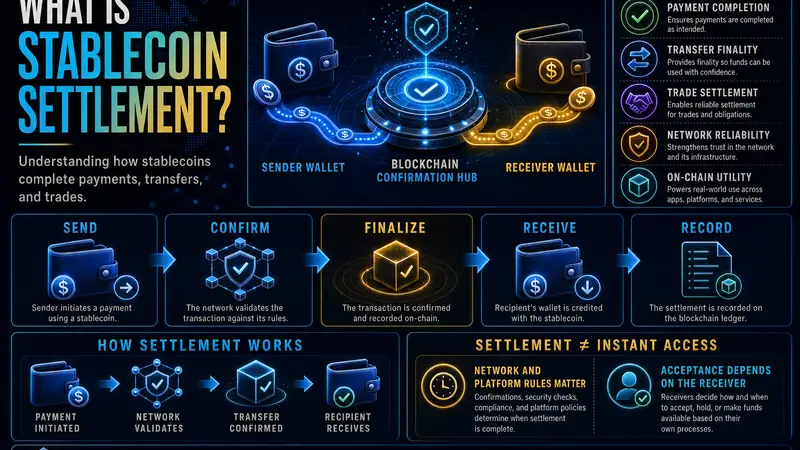
Stablecoin settlement is the completion of a transfer, payment, or trade using stablecoins as the settlement asset.
Loading page…
Beginner-friendly crypto, macro, and market structure explainers for reading the Daily Pulse with more context.
Showing 1–12 of 326 guides
Stablecoin settlement is the completion of a transfer, payment, or trade using stablecoins as the settlement asset.
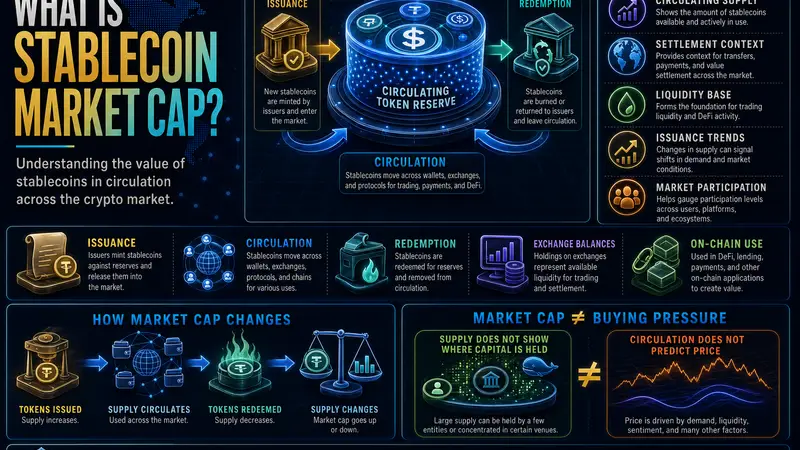
Stablecoin market cap shows the value of stablecoins in circulation and adds context about the crypto ecosystem’s stablecoin supply.
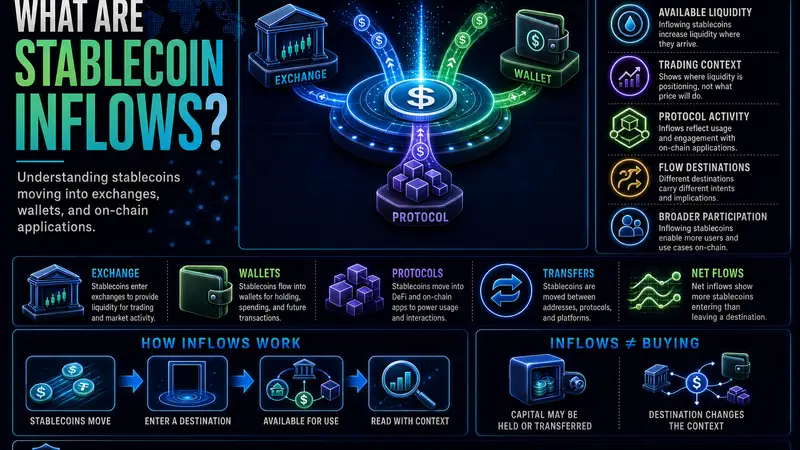
Stablecoin inflows show where stablecoin capital is moving, adding context about possible trading, settlement, or application activity.
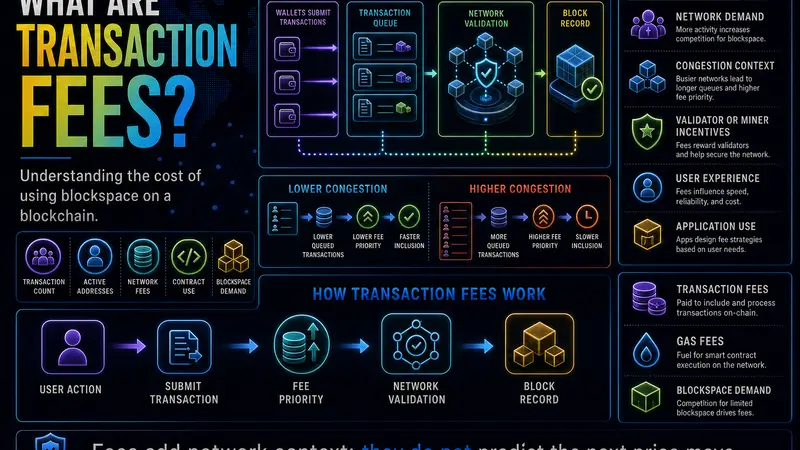
Transaction fees are the cost of using blockchain blockspace and add context about network demand, congestion, and incentives.
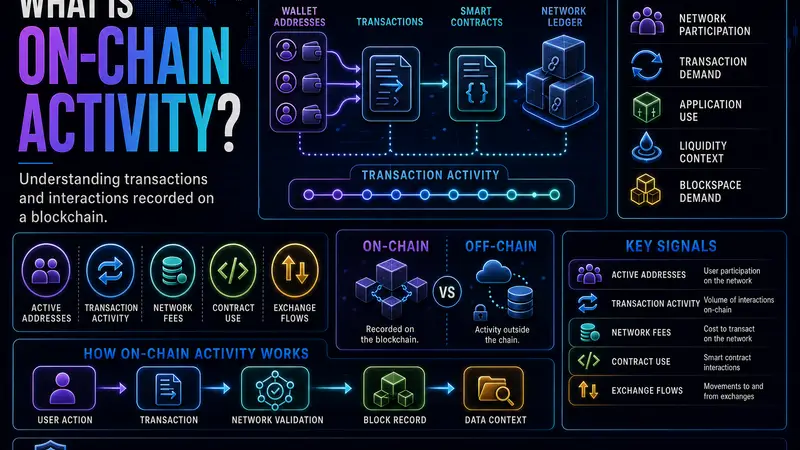
On-chain activity is blockchain-recorded network use that helps add context about transactions, participation, and application activity.
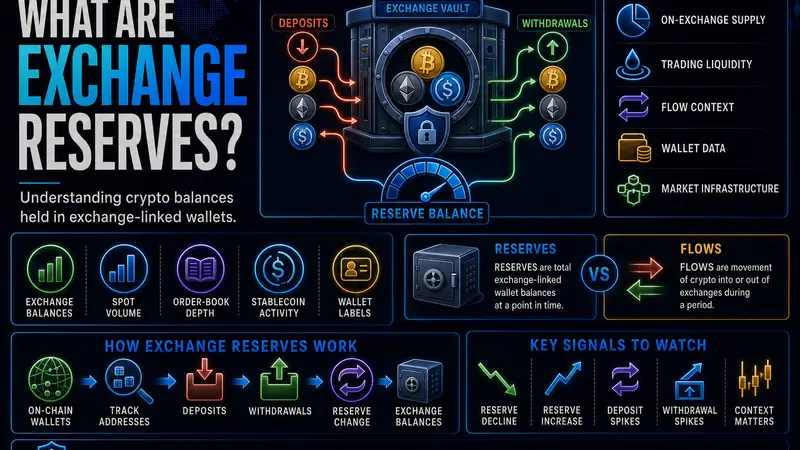
Exchange reserves are balances held in exchange-linked wallets, helping add context to on-exchange supply and crypto flows.
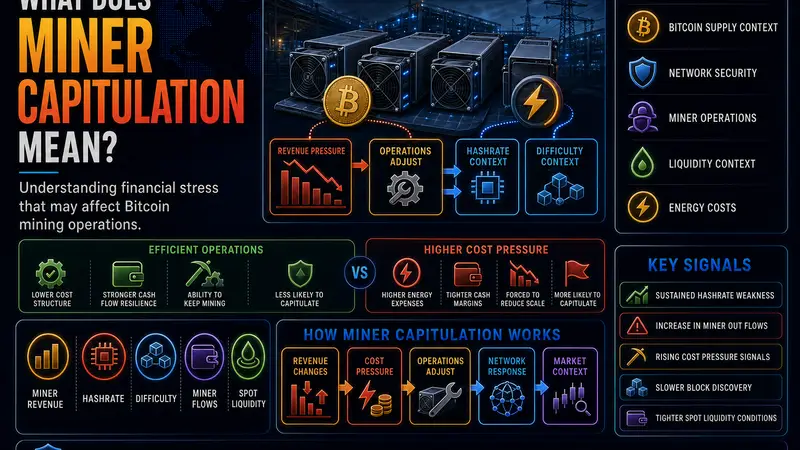
Miner capitulation is mining-sector financial stress that can affect operations and Bitcoin supply context without predicting price.
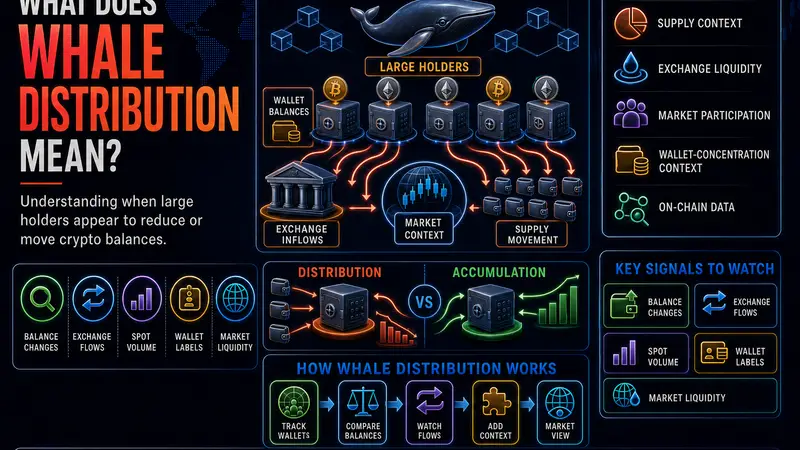
Whale distribution is a pattern of large holders reducing or redistributing balances, adding context about supply and exchange flows.
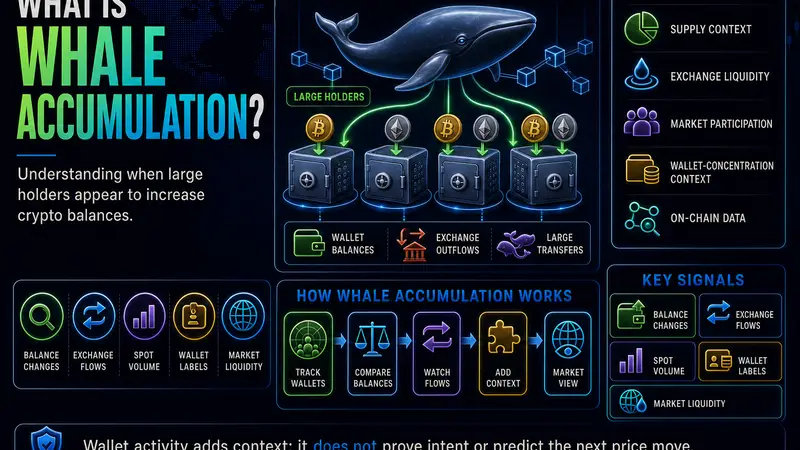
Whale accumulation is a pattern of large holders increasing crypto balances, adding context about supply, exchange flows, and participation.
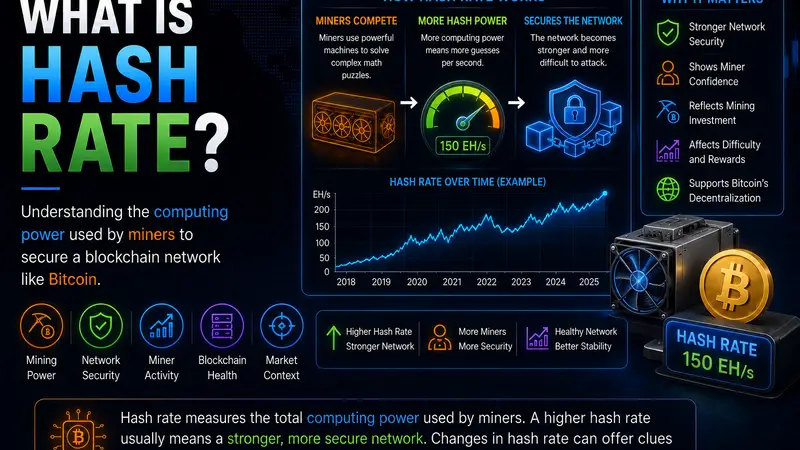
Hash rate shows how much computing power is being used to help secure a proof-of-work network like Bitcoin.
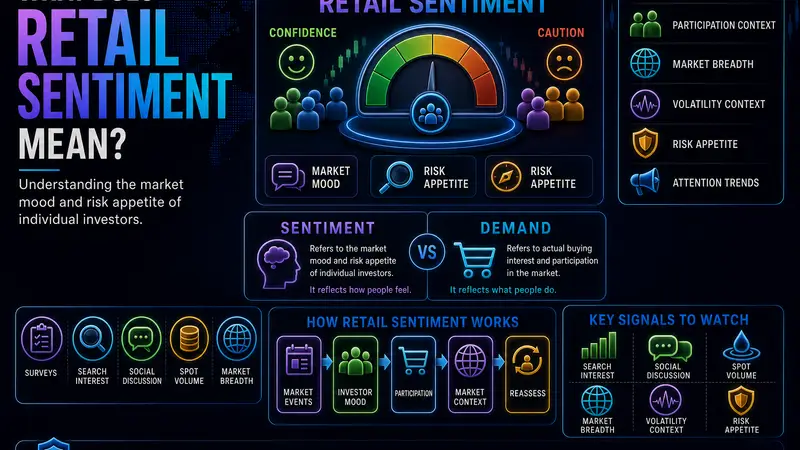
Retail sentiment is the overall mood of individual investors and helps explain changes in confidence, risk appetite, and participation.
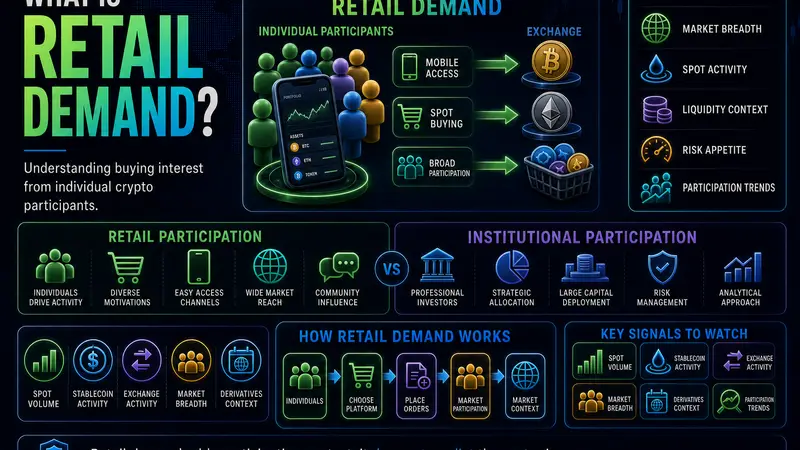
Retail demand is buying interest from individual investors and helps show how broadly everyday participants are engaging with crypto.
Beginner-friendly crypto, macro, and market structure explainers for reading the Daily Pulse with more context.
Showing 97–108 of 326 guides
Stablecoin settlement is the completion of a transfer, payment, or trade using stablecoins as the settlement asset.
Stablecoin market cap shows the value of stablecoins in circulation and adds context about the crypto ecosystem’s stablecoin supply.
Stablecoin inflows show where stablecoin capital is moving, adding context about possible trading, settlement, or application activity.
Transaction fees are the cost of using blockchain blockspace and add context about network demand, congestion, and incentives.
On-chain activity is blockchain-recorded network use that helps add context about transactions, participation, and application activity.
Exchange reserves are balances held in exchange-linked wallets, helping add context to on-exchange supply and crypto flows.
Miner capitulation is mining-sector financial stress that can affect operations and Bitcoin supply context without predicting price.
Whale distribution is a pattern of large holders reducing or redistributing balances, adding context about supply and exchange flows.
Whale accumulation is a pattern of large holders increasing crypto balances, adding context about supply, exchange flows, and participation.
Hash rate shows how much computing power is being used to help secure a proof-of-work network like Bitcoin.
Retail sentiment is the overall mood of individual investors and helps explain changes in confidence, risk appetite, and participation.
Retail demand is buying interest from individual investors and helps show how broadly everyday participants are engaging with crypto.