July 20262 minBeginner
What Is Altcoin Strength?
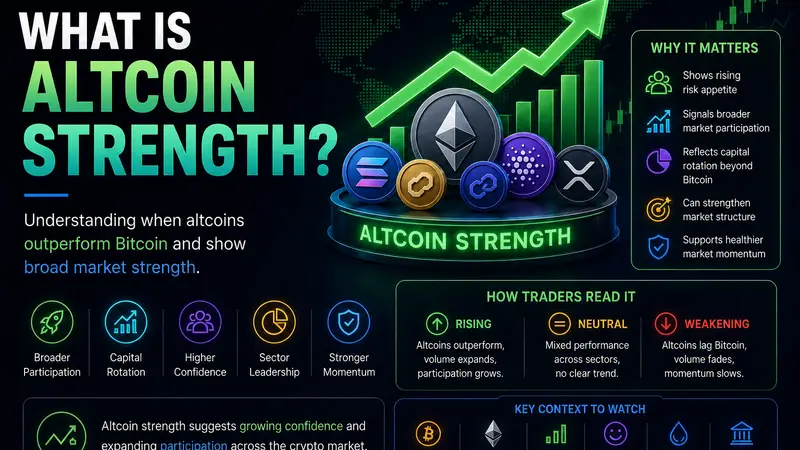
Altcoin strength describes when cryptocurrencies beyond Bitcoin perform well and attract broader market participation.
012
Read guideLoading page…
Beginner-friendly crypto, macro, and market structure explainers for reading the Daily Pulse with more context.
Showing 1–12 of 326 guides
Altcoin strength describes when cryptocurrencies beyond Bitcoin perform well and attract broader market participation.
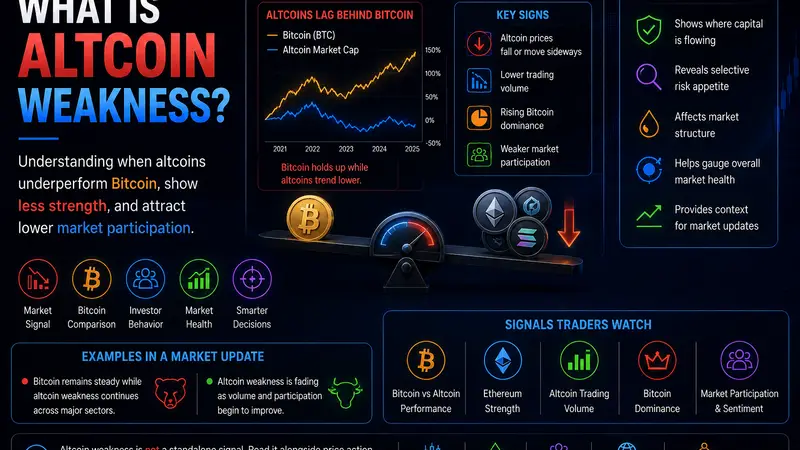
Altcoin weakness describes periods when many altcoins underperform, helping traders understand broader crypto market participation.
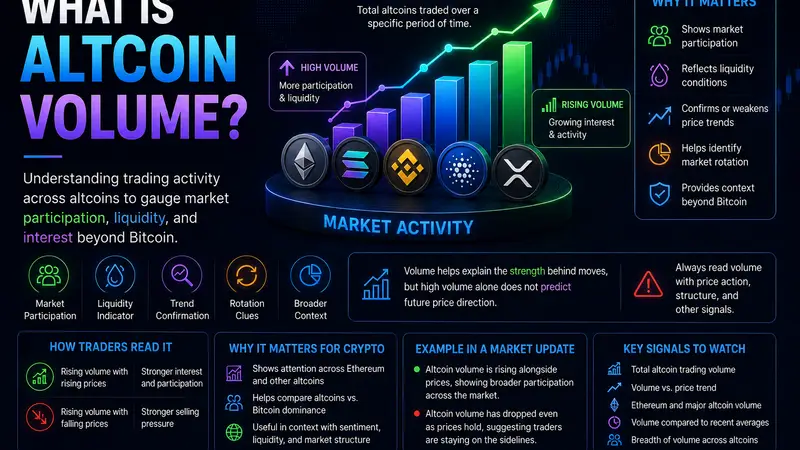
Altcoin volume measures trading activity across altcoins and helps explain how much participation is supporting the crypto market.
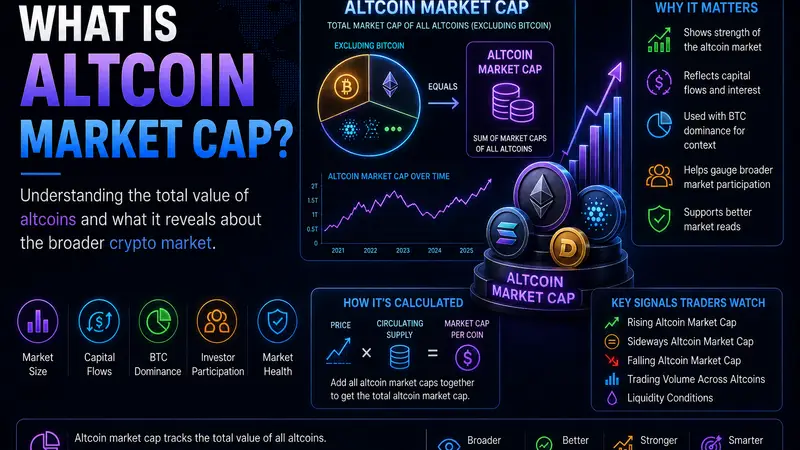
Altcoin market cap measures the total value of altcoins and helps traders understand broader participation across the crypto market.
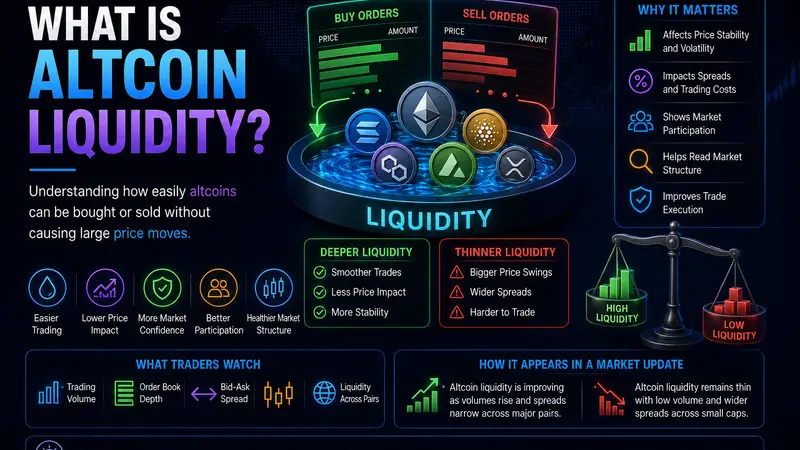
Altcoin liquidity shows how easily an altcoin can be traded without causing a large price move.
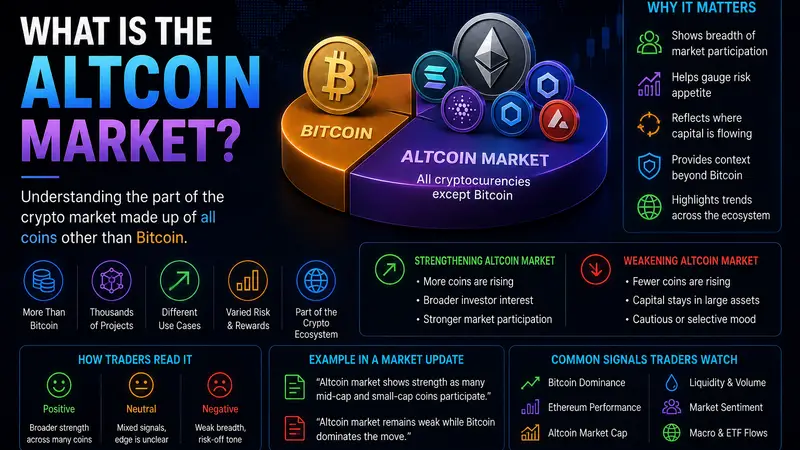
Altcoin market refers to cryptocurrencies other than Bitcoin and helps show how broadly investors are participating across crypto.
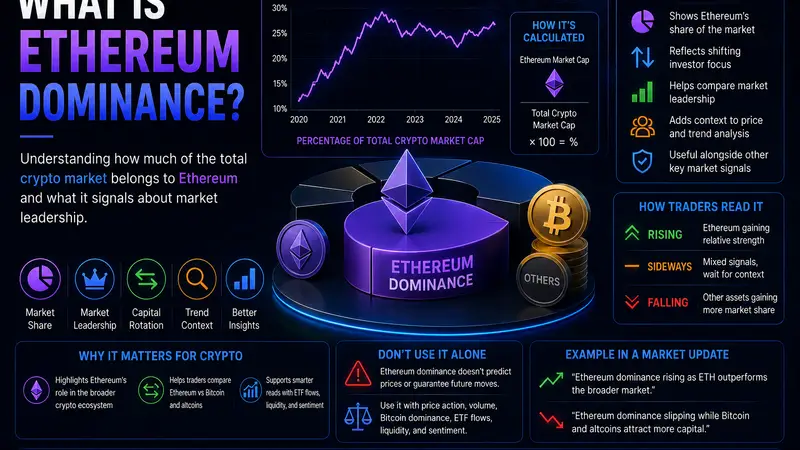
Ethereum dominance measures Ethereum’s share of the total crypto market and helps explain how capital is moving across digital assets.
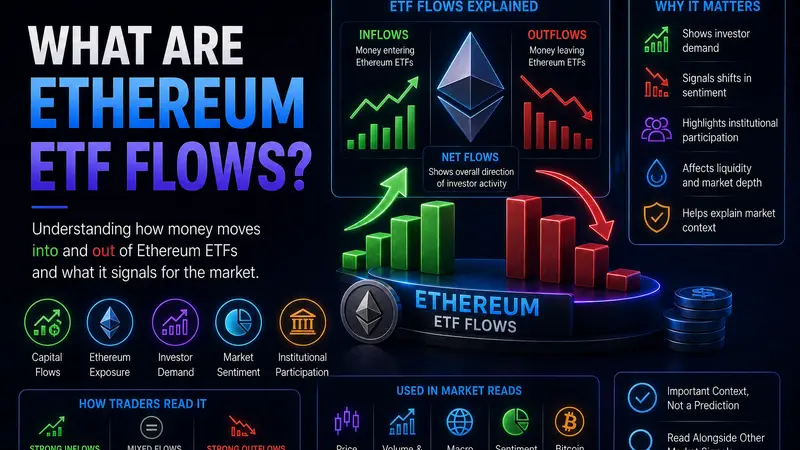
Ethereum ETF flows show whether money is entering or leaving Ethereum ETFs, helping traders understand investor demand and market sentiment.
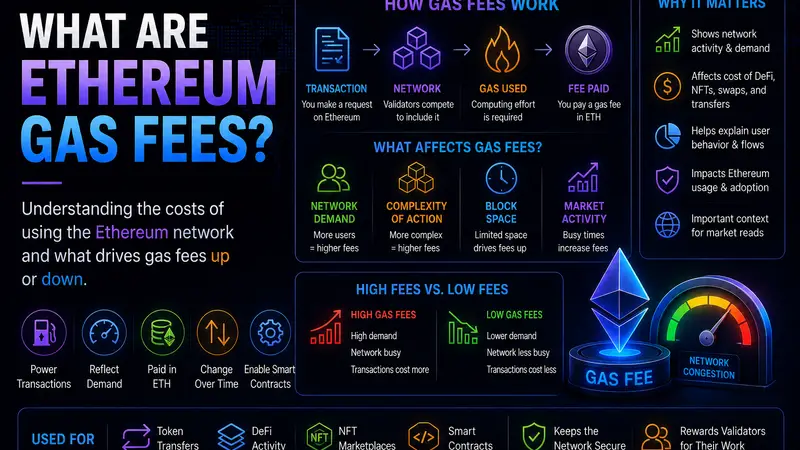
Ethereum gas fees are the costs of using the Ethereum network and can help explain changes in network activity and demand.
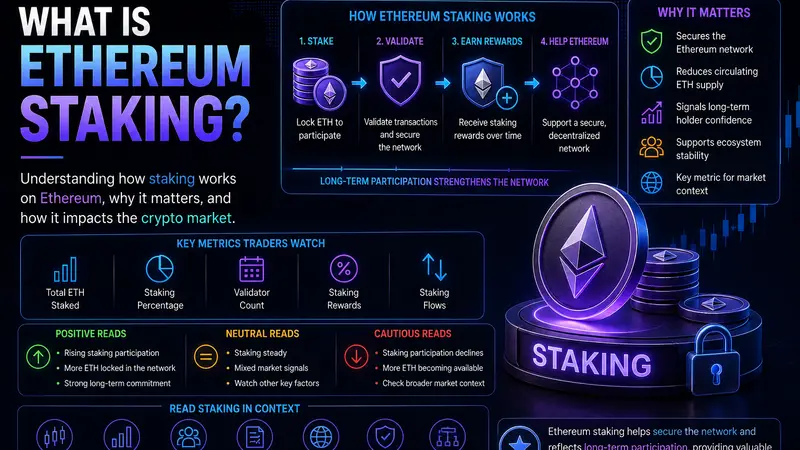
Ethereum staking helps secure the network and provides useful context for understanding Ethereum and broader crypto markets.
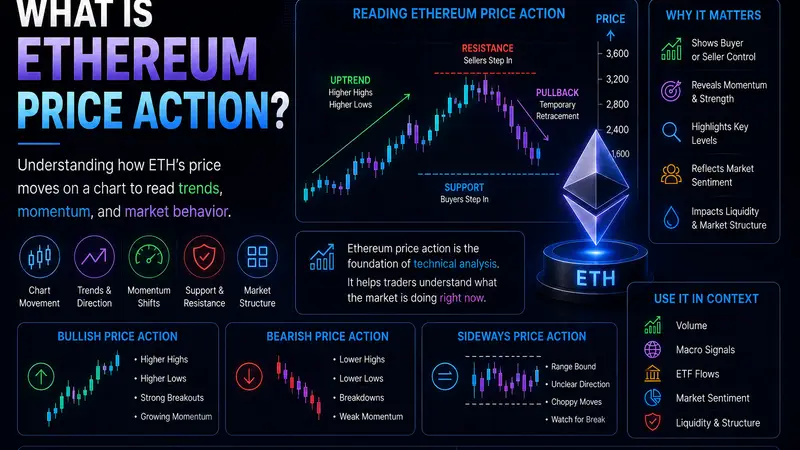
Ethereum price action describes how ETH moves on a chart and helps traders understand momentum, trends, and overall market behavior.
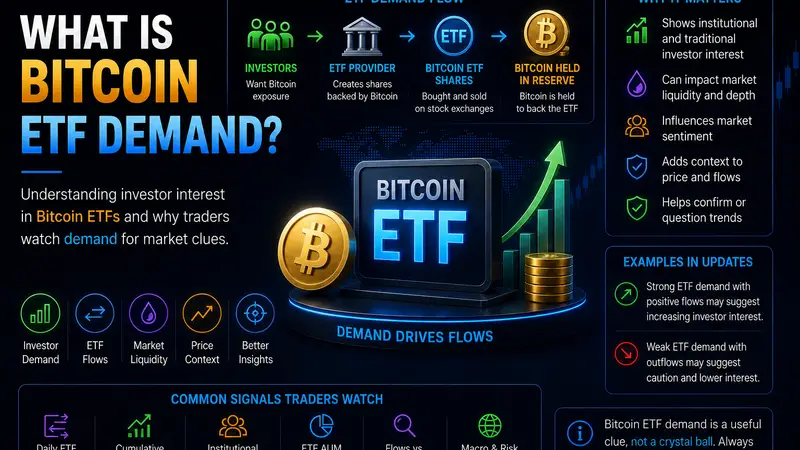
Bitcoin ETF demand shows investor interest in Bitcoin ETFs and helps provide context for liquidity, sentiment, and market conditions.
Beginner-friendly crypto, macro, and market structure explainers for reading the Daily Pulse with more context.
Showing 169–180 of 326 guides
Altcoin strength describes when cryptocurrencies beyond Bitcoin perform well and attract broader market participation.
Altcoin weakness describes periods when many altcoins underperform, helping traders understand broader crypto market participation.
Altcoin volume measures trading activity across altcoins and helps explain how much participation is supporting the crypto market.
Altcoin market cap measures the total value of altcoins and helps traders understand broader participation across the crypto market.
Altcoin liquidity shows how easily an altcoin can be traded without causing a large price move.
Altcoin market refers to cryptocurrencies other than Bitcoin and helps show how broadly investors are participating across crypto.
Ethereum dominance measures Ethereum’s share of the total crypto market and helps explain how capital is moving across digital assets.
Ethereum ETF flows show whether money is entering or leaving Ethereum ETFs, helping traders understand investor demand and market sentiment.
Ethereum gas fees are the costs of using the Ethereum network and can help explain changes in network activity and demand.
Ethereum staking helps secure the network and provides useful context for understanding Ethereum and broader crypto markets.
Ethereum price action describes how ETH moves on a chart and helps traders understand momentum, trends, and overall market behavior.
Bitcoin ETF demand shows investor interest in Bitcoin ETFs and helps provide context for liquidity, sentiment, and market conditions.