
July 20262 minBeginner
What Is Market Participation?
Learn what market participation means and how traders use activity, volume, and liquidity to read the crypto market.
Loading page…
Beginner-friendly crypto, macro, and market structure explainers for reading the Daily Pulse with more context.
Showing 1–12 of 326 guides
Learn what market participation means and how traders use activity, volume, and liquidity to read the crypto market.

Learn what crypto infrastructure means, why it matters, and how the systems behind crypto support networks, wallets, and services.

Learn what crypto adoption means, why it matters, and how traders use adoption signals to understand the growth of crypto.

Learn what crypto supply means, why it matters, and how traders read supply alongside demand, liquidity, and market conditions.

Learn what crypto demand means, why it matters, and how traders use buying interest to read the crypto market.
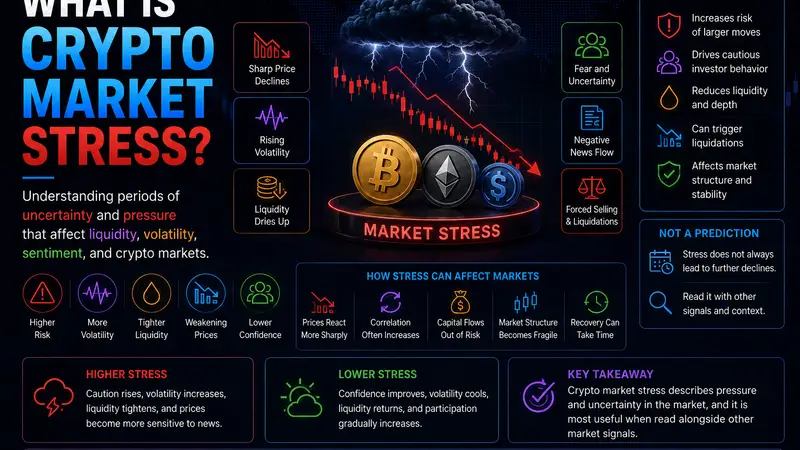
Crypto market stress describes periods of higher uncertainty that can influence liquidity, volatility, sentiment, and crypto market behavior.

A crypto market cycle describes how market strength, sentiment, liquidity, and participation can shift over time.

Learn what crypto risk premium means and why it can influence confidence, liquidity, and risk appetite in crypto markets.
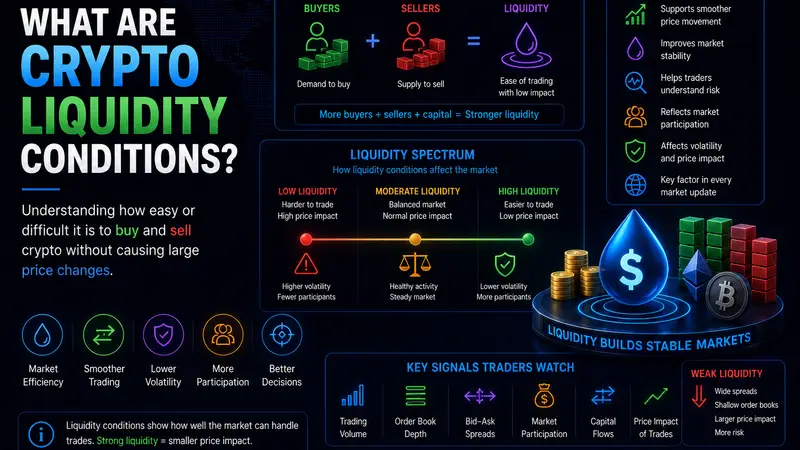
Crypto liquidity conditions show how easily cryptocurrencies can be bought and sold, helping explain market activity and price movement.

Crypto market cap measures the value of a cryptocurrency or the broader market and helps add context to market movements.
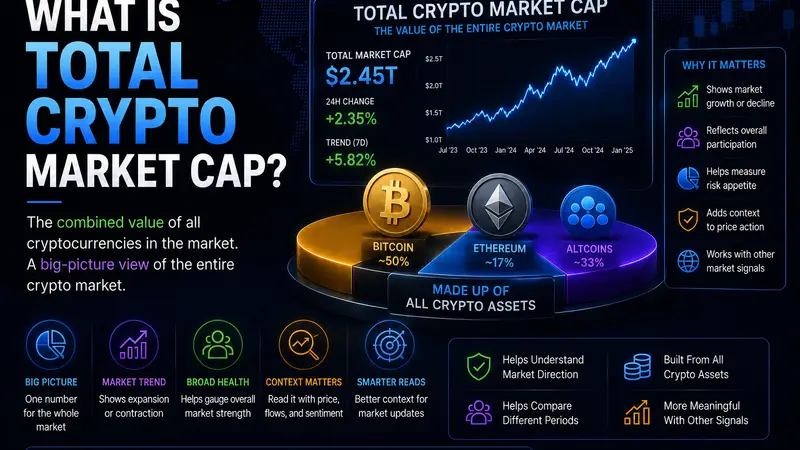
Learn what total crypto market cap means and why it helps explain the overall direction of the crypto market.
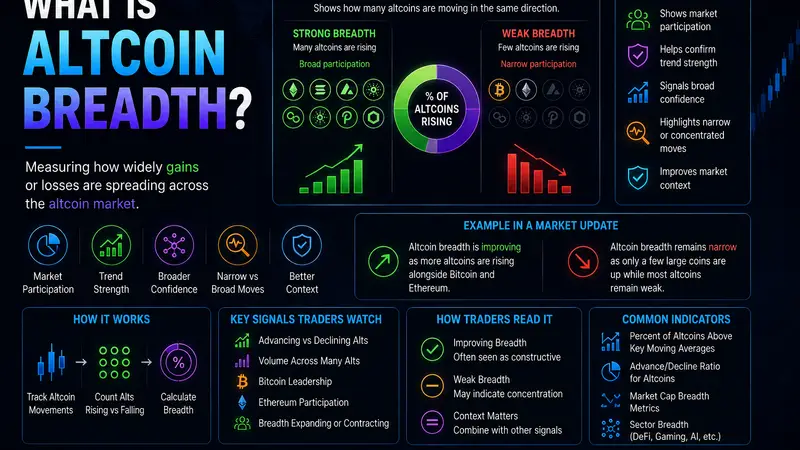
Altcoin breadth shows whether gains or losses are spreading across many altcoins or only a small part of the crypto market.
Beginner-friendly crypto, macro, and market structure explainers for reading the Daily Pulse with more context.
Showing 157–168 of 326 guides
Learn what market participation means and how traders use activity, volume, and liquidity to read the crypto market.
Learn what crypto infrastructure means, why it matters, and how the systems behind crypto support networks, wallets, and services.
Learn what crypto adoption means, why it matters, and how traders use adoption signals to understand the growth of crypto.
Learn what crypto supply means, why it matters, and how traders read supply alongside demand, liquidity, and market conditions.
Learn what crypto demand means, why it matters, and how traders use buying interest to read the crypto market.
Crypto market stress describes periods of higher uncertainty that can influence liquidity, volatility, sentiment, and crypto market behavior.
A crypto market cycle describes how market strength, sentiment, liquidity, and participation can shift over time.
Learn what crypto risk premium means and why it can influence confidence, liquidity, and risk appetite in crypto markets.
Crypto liquidity conditions show how easily cryptocurrencies can be bought and sold, helping explain market activity and price movement.
Crypto market cap measures the value of a cryptocurrency or the broader market and helps add context to market movements.
Learn what total crypto market cap means and why it helps explain the overall direction of the crypto market.
Altcoin breadth shows whether gains or losses are spreading across many altcoins or only a small part of the crypto market.